20 min from the house · Teruel
What to see in Albarracín
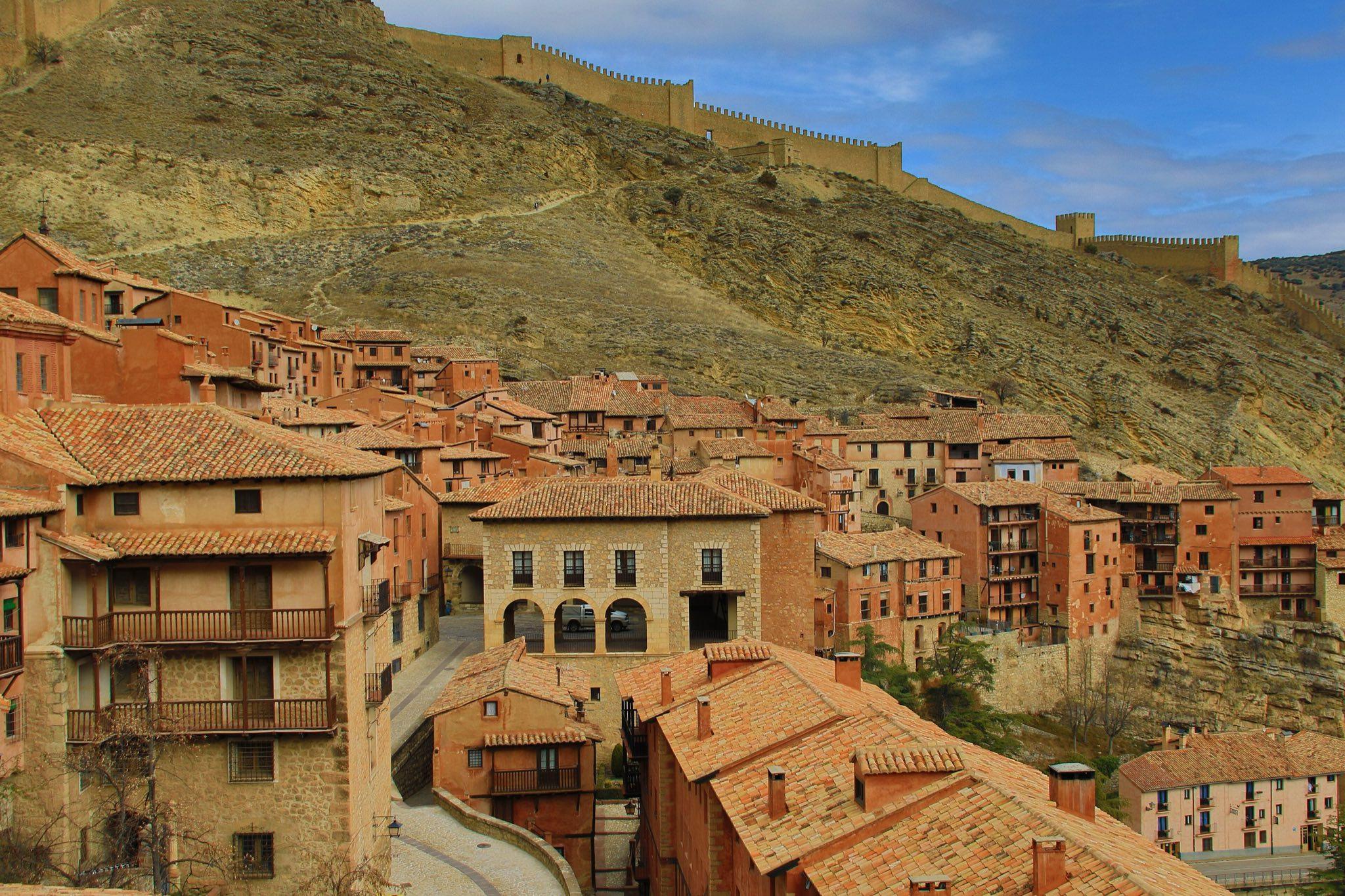
Walls climbing the hillside, reddish gypsum houses leaning over the Guadalaviar river and a medieval old town that survives almost untouched, a National Monument since 1961. One of Spain's most beautiful villages is 17 km from the house.
- From the house≈ 20 min
- Altitude1,171 m
- National MonumentSince 1961
- Population≈ 1,000
Not to miss
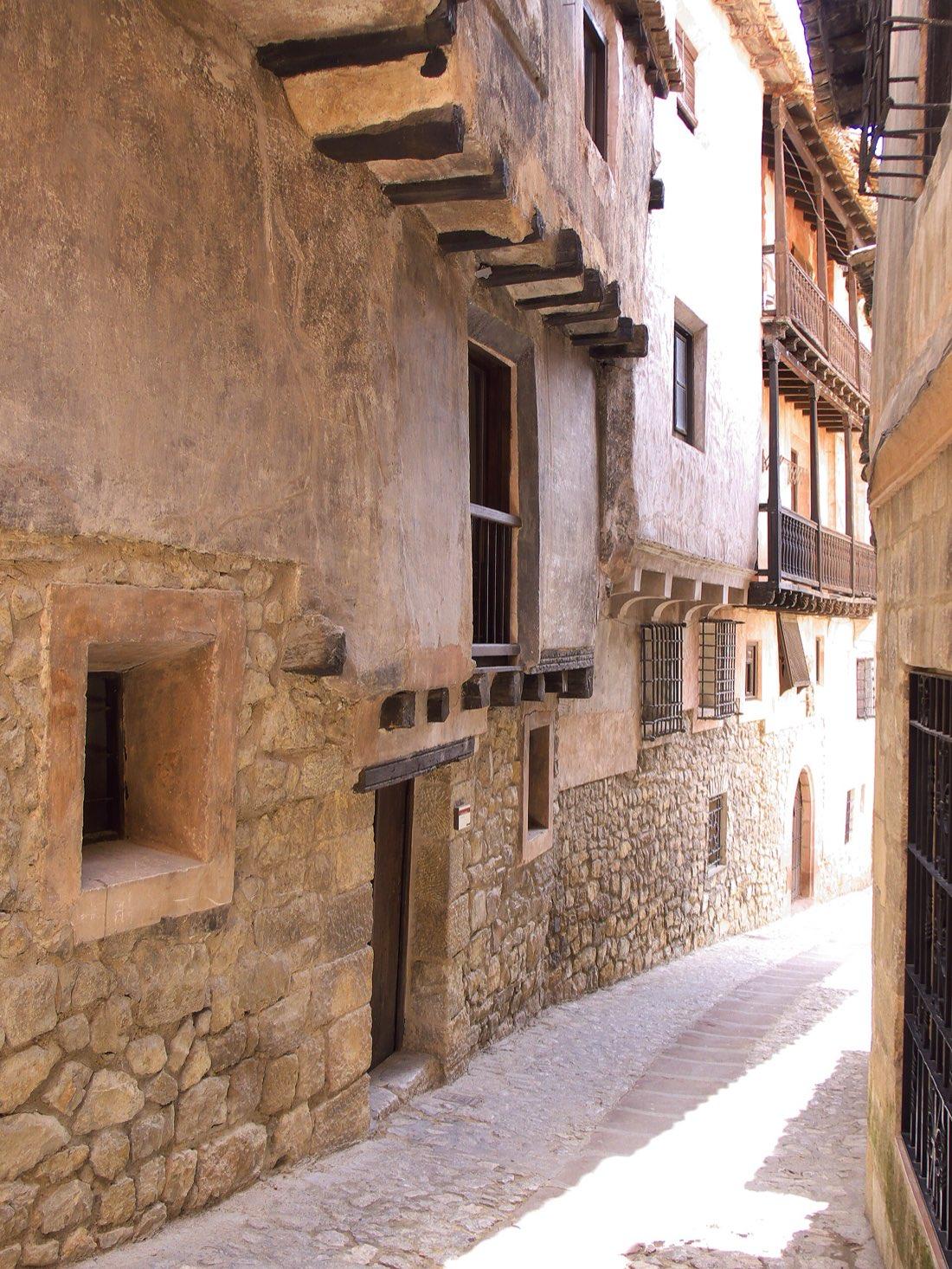
The old town is small and made for walking: steep cobbled lanes and one photogenic corner after another.
- 01
The old town
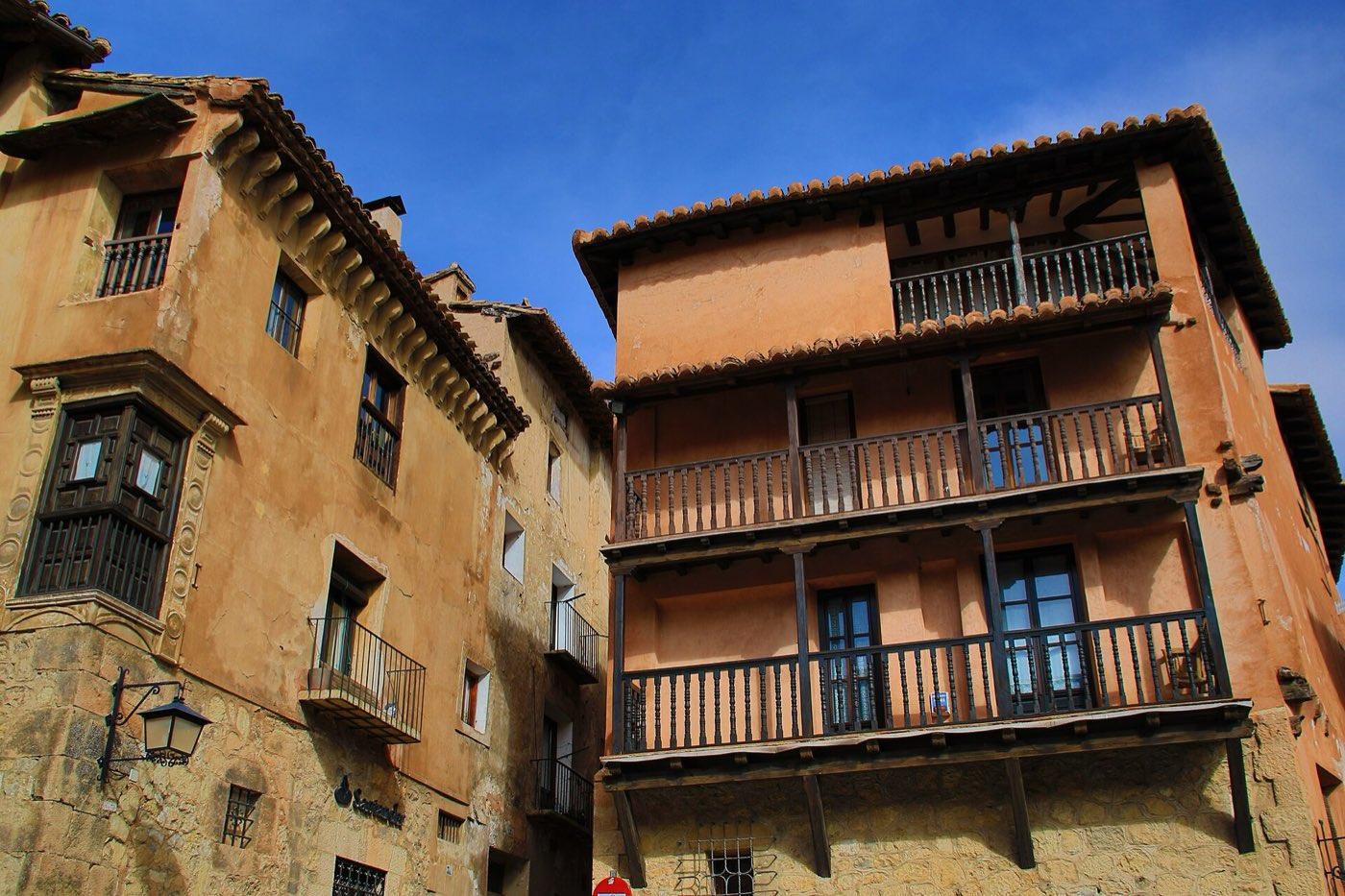
A medieval maze of narrow, steep streets, façades in the distinctive reddish gypsum —the rodeno of the sierra— and timber framing. It has been a National Monument since 1961 and is proposed for UNESCO World Heritage status.
- 02
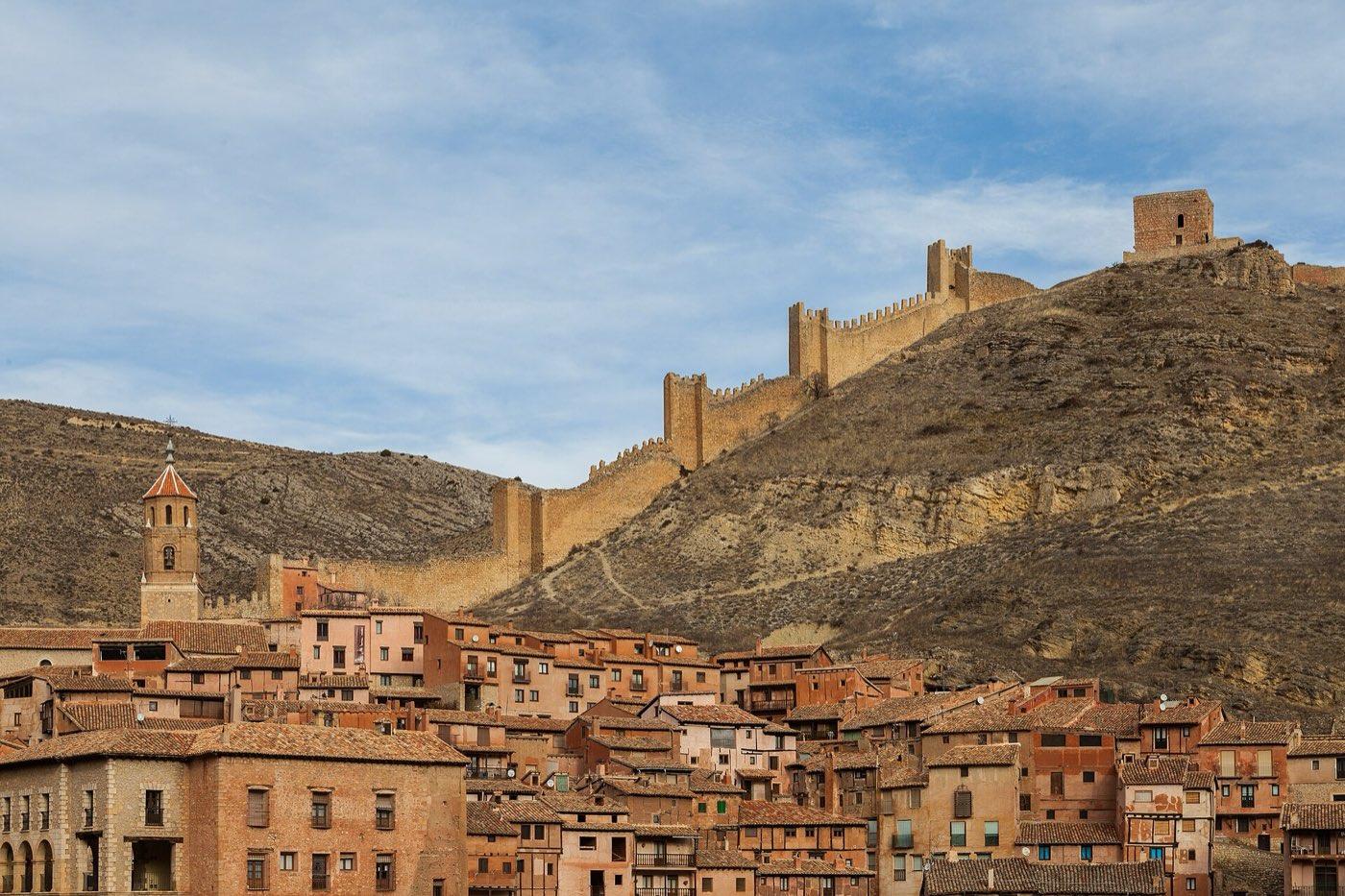
The walls and the Andador tower
The stretch of walls scaling the hillside is the image of Albarracín. The Andador tower at the top is of Andalusi origin (10th–11th centuries); the enclosure was extended after the Christian conquest. Climb up at sunset for the best panorama of the town.
- 03
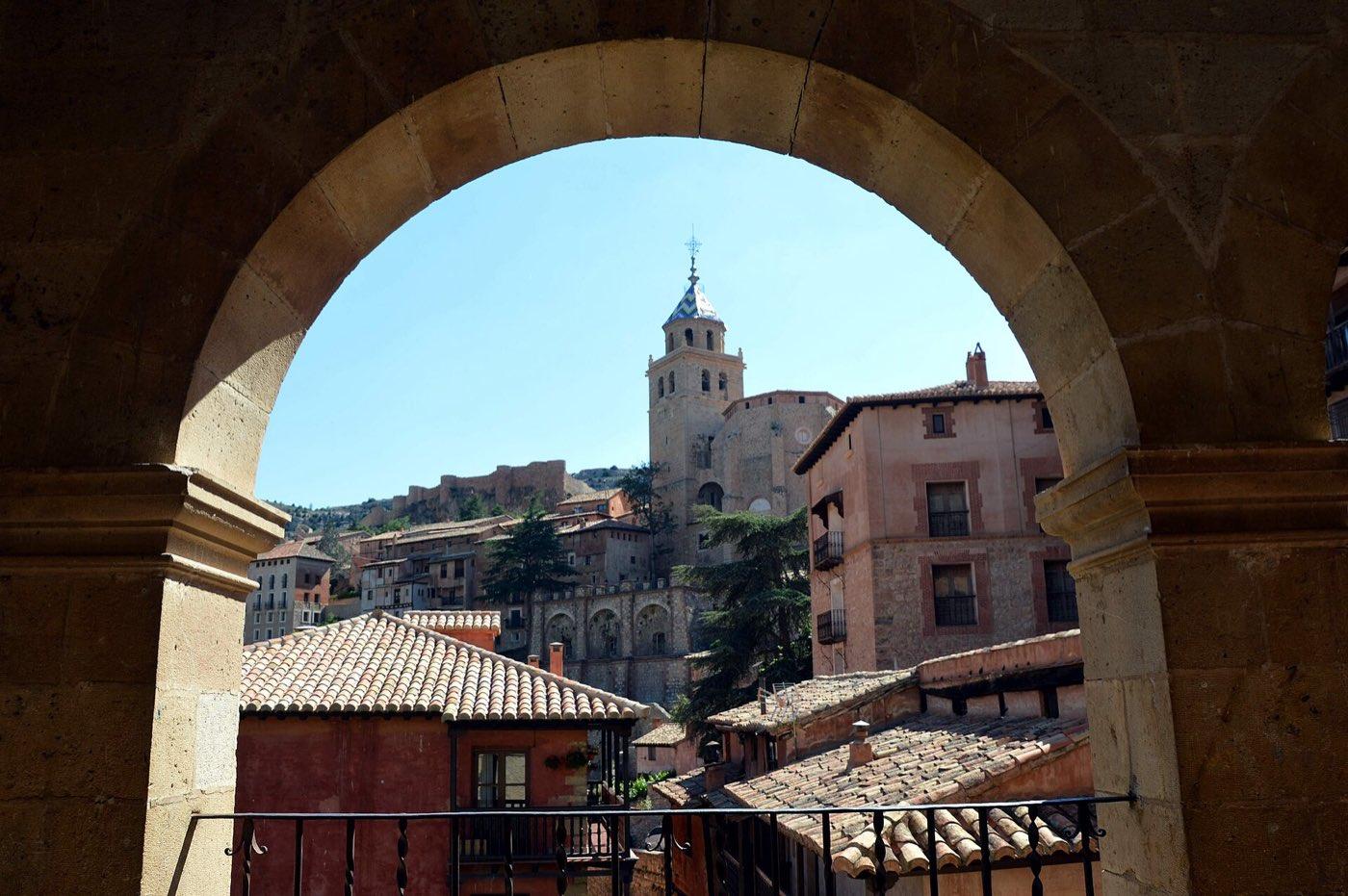
The cathedral of El Salvador
Built in the 16th century over an earlier church, its tower with a glazed-tile spire presides over the rooftops. Next to it, the Bishop's Palace and the Diocesan Museum complete the monumental ensemble.
- 04
The Casa de la Julianeta
The most photographed house in town and an icon of the sierra's vernacular architecture: leaning walls, impossible geometry and timber framing. It stands by the Molina gate, in the upper part of the old town.
- 05
The castle
On the crag overlooking the Guadalaviar meander sits the old Andalusi alcázar (9th–11th centuries), residence of the taifa kings. Excavations have recovered much of the site, which can be visited on a guided tour.
- 06
The Rodeno rock art
About 5 km away, in the Pinares de Rodeno Protected Landscape, several shelters hold Levantine rock paintings listed as part of the Rock Art of the Mediterranean Basin, a UNESCO World Heritage site. Waymarked trails wind between red sandstone formations.

A bit of history
The name comes from the Banu Razin, the Berber dynasty that made Albarracín the capital of an independent taifa kingdom in the 11th century. The Andador tower, the layout of the alcázar and the maze of streets date back to that era.
Between 1170 and 1284 it was a small independent lordship wedged between Castile and Aragon, ruled by the Navarrese Azagra family and with its own bishopric. In the late 13th century it passed to the Crown of Aragon under Peter III.
Today Albarracín has about a thousand residents. It has been a National Monument since 1961, received the Gold Medal of Merit in Fine Arts in 1996 and is proposed for UNESCO World Heritage status. Its medieval silhouette survives practically intact.
Albarracín in pictures
Photographs: Wikimedia Commons · CC BY-SA
Tips for your visit
- When to go
- Weekdays and early mornings are far more enjoyable; on long weekends and in high summer the town fills up. In winter, under fog or snow, it feels like another planet — and it's usually empty.
- Parking
- The old town is essentially pedestrian: leave the car at the car parks by the main road at the entrance and walk up.
- Guided tours
- Daily guided tours cover the old town and the cathedral ensemble; they are the only way into some buildings, such as the castle.
- Footwear
- Slopes and cobbles: comfortable shoes. And bring a layer even in summer — the town sits above 1,100 m.
Where to stay near Albarracín
Visit by day, sleep in the sierra
Casa de la Hoz is a whole house for 6 guests in Calomarde, 20 minutes from Albarracín and right at the start of the Barranco de la Hoz trail. The perfect quiet base for exploring the sierra.
Check availability